
Expert diagnosis. Minimally invasive solutions. Faster recovery.
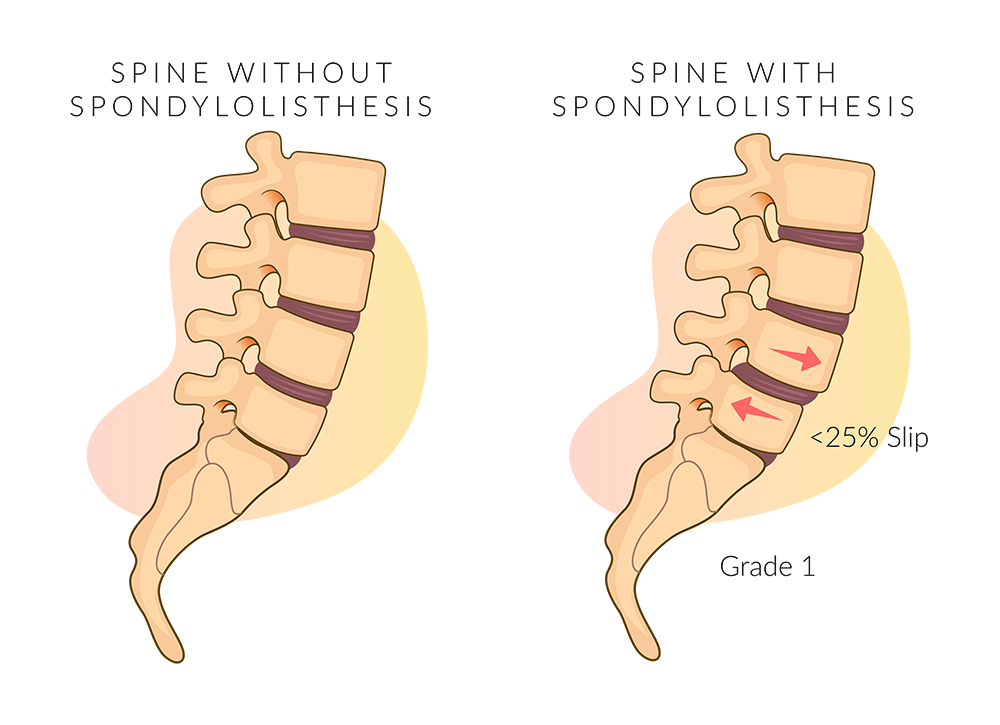
Slipped disc is a condition commonly seen in patients suffering from leg and back pain. It is commonly caused by a condition known as spondylolisthesis (SPAWN-de-luh-LIS-these-is) — where one vertebra slips forward over the one below it, placing pressure on spinal nerves.
At Virginia Spine Specialists, we focus on precise diagnosis and advanced, minimally invasive treatments to relieve pain and restore mobility.
Symptoms
Understanding Slipped Disc Pain
Despite the name, a slipped disc does not mean the disc itself has moved. In spondylolisthesis, the bones of the spine shift out of alignment, which can irritate or compress nearby nerves.
Common Symptoms
Symptoms vary depending on severity but may include:
- Persistent lower back pain
- Leg pain similar to sciatica
- Numbness, tingling, or weakness in the legs
- Pain that worsens with standing, walking, or physical activity
- Reduced flexibility or difficulty maintaining posture
Common Causes
Spondylolisthesis may develop due to:
- Degenerative changes from aging and wear-and-tear
- Trauma or injury, including sports-related stress
- Congenital factors, present from birth
Some patients experience minimal discomfort, while others may have symptoms that significantly affect daily life.
Treatment Options
Conservative (Non-Surgical) Treatment
Most patients improve without surgery. Initial treatment typically focuses on relieving pain and stabilizing the spine, including:
- Physical therapy to strengthen core and spinal muscles
- Anti-inflammatory medications or targeted injections
- Activity modification and posture education
These approaches are often effective in reducing symptoms and improving function.
Minimally Invasive Surgical Treatment
If pain, weakness, or nerve symptoms persist despite conservative care, surgery may be recommended.
Modern minimally invasive spine surgery techniques may include:
- Placement of a plastic or metal cage to stabilize the spine
- Use of pedicle screws to restore proper alignment
- Small incisions with minimal muscle disruption
Benefits may include:
- Less postoperative pain
- Shorter hospital stays
- Faster recovery and return to daily activities
In carefully selected patients, outcomes are highly successful and long-lasting.
Expert Spine Care with Dr. Mudit Sharma
Dr. Sharma is a board-certified spine surgeon specializing in minimally invasive spine care for patients across Northern Virginia, including Loudoun, Prince William, and Spotsylvania counties.
At Virginia Spine Specialists, you’ll receive:
- Personalized treatment plans
- Access to advanced minimally invasive techniques
- Compassionate, patient-centered care close to home
Call (571) 921-4877 for an appointment.
Locations: Manassas • Fredericksburg • Dulles
Frequently Asked Questions
Most patients do not need surgery. Many find relief with physical therapy, medications, or injections. Surgery is considered only if symptoms persist or worsen despite appropriate non-surgical care.
Not always. A “slipped disc” often refers to spondylolisthesis (vertebra slipping), while a herniated disc involves disc material pressing on nerves. A proper evaluation is needed to determine the exact cause.
In some cases, the condition may progress, especially with continued stress on the spine. Early diagnosis and treatment can help manage symptoms and prevent worsening.
Recovery varies, but many patients return to light activities within weeks. Minimally invasive techniques typically allow for faster recovery compared to traditional open surgery.

Phone: (571) 921-4877
Toll Free: (855) 774-6334
Fax: (571) 208-0585
Toll Free: (855) 774-6334
Fax: (571) 208-0585
Conditions We Treat
Chronic Back Pain
Neck Pain
Arm Pain and/or Numbness
Leg Pain and/or Numbness
Herniated Disc – Lumbar and Cervical
Sacroiliac Joint (SI) Pain
Slipped Disc
Spinal Stenosis
Spinal Fractures
Whiplash Syndrome
Failed Back Surgery
Office Hours & Locations
Monday – Thursday: 8am – 4pm Friday: 8am – 2pm Loudoun County 24430 Stone Springs Blvd, Suite 250 Dulles, VA 20166 Spotsylvania County 4604 Spotsylvania Parkway, Suite 300 Fredericksburg, VA 22408 Prince William County 9625 Surveyor Ct. Suite 320 Manassas, VA 20110