
Prompt evaluation and precise treatment to protect spinal stability and nerve function
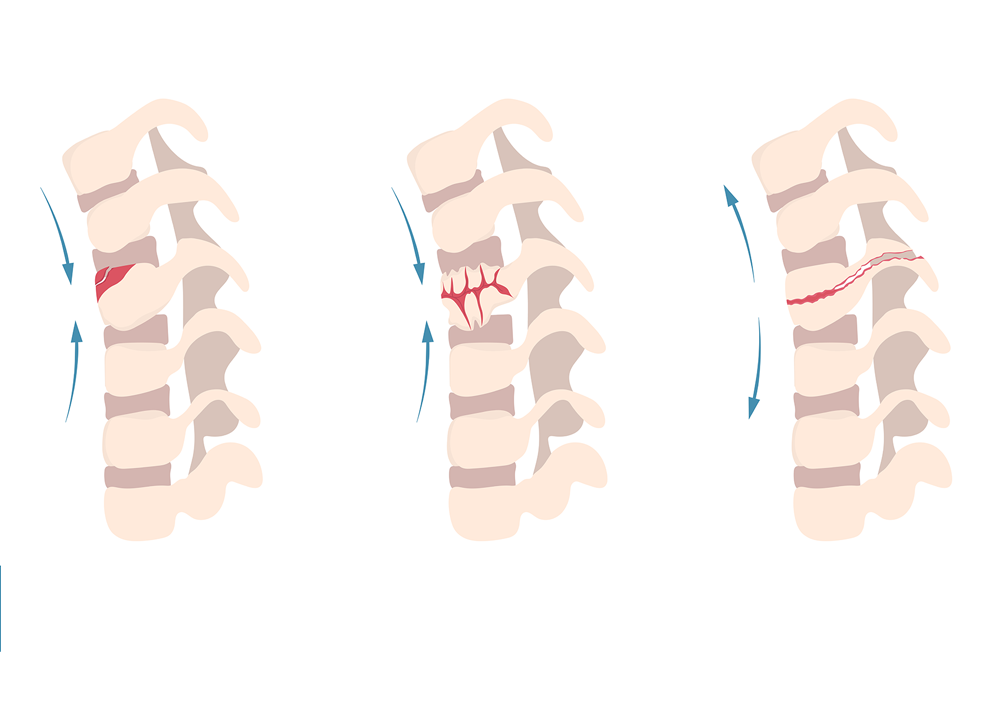
Spinal fractures can range from mild compression injuries to complex fractures that threaten spinal stability and nerve health. Spinal cord injuries (SCI) occur when there is a trauma to the spinal cord that is not caused by disease or surgery. SCIs have different types of effect on the patient’s mobility, depending on where the nerve roots and cord are injured. Results of a spinal cord injury can be mild to severe pain, paralysis, and in some cases death.
At Virginia Spine Specialists, we provide timely, expert evaluation and individualized treatment—beginning with conservative care when appropriate and advancing to minimally invasive stabilization when necessary.
Understanding Spinal Cord Injuries
There are different levels of SCI and they are classified through an alphabetic system.
- Level A: complete SCI with no preservation of mobility or motor function.
- Level B: “incomplete” SCI with reservation of motor skills and sensory function but severely limited mobility
- Level C: incomplete SCi with reservation of motor skills, sensory functions, more than half of the key muscles have a mass lower than 3, and active mobility.
- Level D: incomplete SCI with reservation of motor skills, sensory functions, at least half of the key muscles have a mass lower than 3, and active mobility.
- Level E: normal motor skills, sensory functions, muscle mass, and mobility.
Symptoms
Symptoms depend on the type and severity of the fracture and may include:
- Sudden or severe back pain
- Pain that worsens with movement or standing
- Localized tenderness over the spine
- Loss of height or spinal deformity (such as kyphosis)
- Numbness, tingling, or weakness (if nerves are affected)
Because some fractures—especially compression fractures—may present with subtle symptoms, evaluation is important after injury or in patients with known osteoporosis.
Common Causes
- Trauma (falls, motor vehicle accidents, sports injuries)
- Osteoporosis, leading to compression fractures
- Pathologic fractures related to tumors or infection
- High-impact or repetitive stress injuries
Prevention & Treatment
Prevention*
Unlike most spinal diseases and degenerative disorders, spinal cord injuries can be prevented by using simple safety precautions.
- ALWAYS wear a seat belt when driving or riding in a motor vehicle. Motor vehicle accidents are the number one cause of spinal cord injuries in the U.S. for people under 65.
- ALWAYS wear a helmet when riding a bicycle or motorcycle, when participating in activities or sports such as football, or rock climbing, and when working or walking around a construction zone.
- NEVER keep firearms loaded in an exposed space. Accidental gun wounds and gun violence are a major cause of SCIs. Always keep your unloaded firearm in a safe separate, secure location from your ammunition.
- SECURE rugs and loose electrical cords, put away toys, use safety gates, and install window guards to prevent falls. Falls are the number one cause of SCIs in those 65 or older, and many children incur SCIs each year from falling down stairs or out of windows. Install grab bars and handrails if necessary.Prevention is the best treatment for any injury, and your spinal cord is the most critical component to your mobility and motor function. Follow safety guidelines and precautions in order to protect your neck, spine, and spinal cord.
*These recommendations are meant for general education and are not intended to diagnose, prevent or treat a specific disease. Please contact Dr. Sharma for questions regarding the specific treatment of your symptoms.
Minimally Invasive Procedure: Vertebroplasty
Vertebroplasty is an outpatient procedure that treats pain from spinal fractures. Spinal fractures can be extremely excruciating and demobilizing, and vertebroplasty allows the patient a safe, speedy recovery. The technique involves injecting a special type of cement into the fracture vertebrae, which then hardens and repairs the fractures. Vertebroplasty is used to treat conditions like osteoporosis, deep vein thrombosis, and other type of vertebrae compression issues.
Vertebrae fractures don’t always occur in isolated incidents, and can be caused by a variety of degenerative conditions that affect the bones. When these bones break or erode, fragments develop and cause pain when they are rubbed against each other. In vertebroplasty, a needle known as a trocar is punctured into the back where the cement injection is implanted in the vertebrae. This injection allows the split bones or loose fragments to congeal together and regrow the bone properly.
A major benefit of this procedure is the rapid recovery time. After the vertebroplasty is completed, the doctor will likely keep the patient for observation for a few hours. Once the patient is cleared to go home, more than likely he or she will be able to walk or stand with little to no pain. While most people experience immediate pain relief after vertebroplasty, it may take up to three days for some. Majority of over the counter pain medications will be able to alleviate the discomfort. Your physician will probably schedule a follow up visit to ensure the procedure worked properly.
While there are many benefits to this treatment, we would be remiss if we failed to mention that like with all surgeries, there are some risks associated with vertebroplasty which include:
- Infection
- Orthopedic Cement Leakage
- Rare occasions of bleeding and numbness
- Possibility of additional compression
- Low-Risk Allergic reaction
Treatment of Spinal Fractures
It is often a scary and confusing diagnosis if you or someone you know has been diagnosed with a spinal fracture. In this article, we look at common types of spinal fractures and their treatments.
One of the most common spinal fracture is a compression fracture of the spinal column. This occurs in the vertebrae of the spine and can happen with a sudden force or a fall. It is most commonly seen in patients with low bone density (osteoporosis). A large majority of these fractures heal on their own with the help of a back brace and bed rest with appropriate treatment of the underlying osteoporosis. Other reasons for such fractures can be trauma or tumors. If there is a suspicion for a tumor, your spine specialist may perform a bone biopsy to examine pathology of the fracture. In some cases of compression fractures, the patients are in so much pain that they have to be hospitalized for pain control. After obtaining appropriate diagnostic tests (CT, MRI, x-rays, bone scans), the spine specialist may put some cement in the fractured bone to help speed up recovery (in a procedure called vertebroplasty) or restore the wedged fracture with a balloon and then put cement in it (kyphoplasty).
Another type of spinal fracture that is frequently seen in victims of automobile crashes is called a Burst Fracture. These fractures typically involve destruction of many aspects of the spinal column and can be unstable if left untreated. Depending on patients symptoms and diagnostic studies, these fractures may need surgery. The goal of an operation in this setting is to stabilize the spine and to relieve pressure on the spinal canal and nerve roots. There are now minimally invasive techniques that are used to stabilize these fractures. That results in a quick patient recovery, minimal loss of blood during the surgery and remarkably less pain.
Various types of cancers also have a risk of spreading to the spine causing a fracture. These types of fractures are referred to as pathological fractures. Depending on the typ of fracture and the source of the cancer cells, the treatment for these can range from non-operative treatment to complete removal of the cancer through surgery. Again, minimally invasive techniques have been very useful in this setting. By reducing the dissection of soft tissue needed to stabilize the fracture and through a smaller incision, minimally invasive techniques decrease the recovery time dramatically. This is important because this allows the patients to start chemo or radiation therapy quickly.
There are some types of cancers that are very sensitive to radiation and respond quickly to it. These remain a good target for radiation treatment even when they end up spreading to the spine. In those cases, a biopsy may be sufficient to establish the proper diagnosis followed by the appropriate radiation or chemo. Again, if a surgery is needed, the minimally invasive approach achieves all of the above objectives with minimal disruption of patient’s life.
Consult Dr. Mudit Sharma
For more information about minimally invasive procedures or to schedule a consultation on your own, please contact Dr. Sharma, a board-certified neurosurgeon specializing in the diagnosis, prevention, and treatment of Spinal Cord Injuries.
Call (571) 921-4877 for an appointment.
Serving Manassas, Fredericksburg, Dulles and surrounding Northern Virginia communities
Frequently Asked Questions
Yes. Many stable fractures, including some compression fractures, heal with bracing, activity modification, and pain management.
A compression fracture occurs when a vertebra collapses, often due to osteoporosis or minor trauma in weakened bone.
Surgery may be needed when fractures cause instability, deformity, severe pain, or nerve compression.

Phone: (571) 921-4877
Toll Free: (855) 774-6334
Fax: (571) 208-0585
Toll Free: (855) 774-6334
Fax: (571) 208-0585
Conditions We Treat
Chronic Back Pain
Neck Pain
Arm Pain and/or Numbness
Leg Pain and/or Numbness
Herniated Disc – Lumbar and Cervical
Sacroiliac Joint (SI) Pain
Slipped Disc
Spinal Stenosis
Spinal Fractures
Whiplash Syndrome
Failed Back Surgery
Office Hours & Locations
Monday – Thursday: 8am – 4pm Friday: 8am – 2pm Loudoun County 24430 Stone Springs Blvd, Suite 250 Dulles, VA 20166 Spotsylvania County 4604 Spotsylvania Parkway, Suite 345 Fredericksburg, VA 22408 Prince William County 9625 Surveyor Ct. Suite 320 Manassas, VA 20110