
Herniated Disc: What It Feels Like and When It’s Serious
A herniated disc sounds scary, but here’s the truth: not every disc herniation is an emergency, and many improve without surgery. The key is knowing what symptoms are normal “disc irritation” versus signs that your spine needs quick attention.
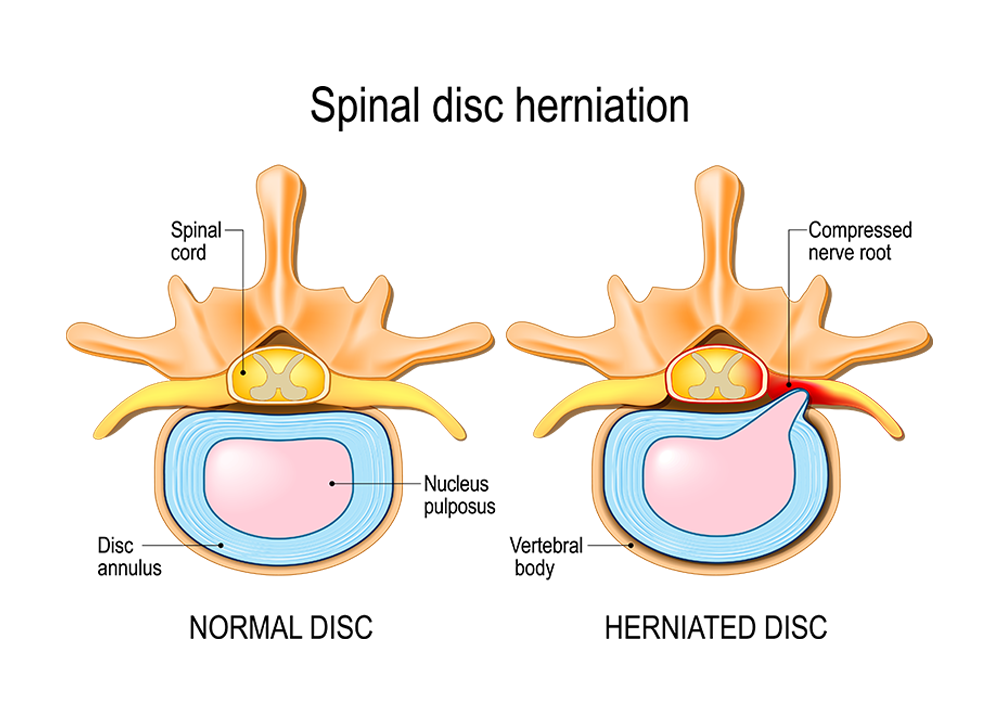
What a Herniated Disc Actually Is (In Plain English)
Between your spine bones (vertebrae), you have cushion-like discs. If a disc’s outer layer weakens or tears, the inner material can push outward. When that bulge presses on a nearby nerve, symptoms show up.
What It Feels Like
A herniated disc can feel very different depending on whether it’s in your neck or low back.
Common symptoms include:
- Sharp pain in the neck or low back that doesn’t feel like simple soreness
- Pain that travels (down your arm or leg)
- Tingling or numbness in fingers, hand, foot, or toes
- Burning or “electric” pain
- Muscle weakness (grip strength, tripping, foot drop, etc.)
If you’re dealing with low back pain that shoots down the buttock and leg, that’s often a sign of nerve irritation, commonly called sciatica.
When It’s Serious (Don’t Wait on These)
Most disc issues can be evaluated in a standard office visit, but a few symptoms are true red flags. Seek urgent care if you have:
- New or worsening weakness in the arm or leg
- Foot drop (your foot slaps the ground or won’t lift normally)
- Loss of bladder or bowel control
- Numbness in the groin/saddle area
- Severe pain with fever or unexplained weight loss
These can indicate significant nerve compression or other serious conditions that need immediate evaluation.
What You Can Do Right Now
If symptoms are mild to moderate, start with a smart plan:
- Keep moving with short walks (avoid bed rest)
- Avoid heavy lifting, bending, and twisting
- Use ice/heat based on what helps most
- Consider physical therapy early—it’s one of the best tools for disc recovery
When to See a Spine Specialist
If your pain lasts more than 1–2 weeks, keeps coming back, or includes numbness/weakness, it’s worth getting evaluated. A spine specialist can confirm what’s going on, rule out serious nerve damage, and build a plan that fits you—whether that’s conservative treatment, injections, or surgery when truly necessary.
Virginia Spine Specialists is an award-winning, minimally invasive spinal care practice with locations in Fredericksburg, VA and Manassas, VA. We also serve these Northern and Central Virginia locations: Haymarket, Gainesville, Culpepper, Front Royal, Spotsylvania, Stafford, Colonial Beach, Tappahannock and Lake Anna.
